In 2026, strategic marketing planning requires businesses to look beyond internal strengths and weaknesses and evaluate the external forces shaping their industries. When developing marketing plans for our larger clients, we often incorporate a PESTEL analysis alongside a SWOT analysis to gain a more comprehensive understanding of the business environment. A PESTEL analysis examines key external factors—including Political, Economic, Social, Technological, Environmental, and Legal influences—that can impact marketing performance, customer behavior, and long-term business growth. Learn more about our marketing strategy and how we help businesses create data-driven plans for sustainable success.
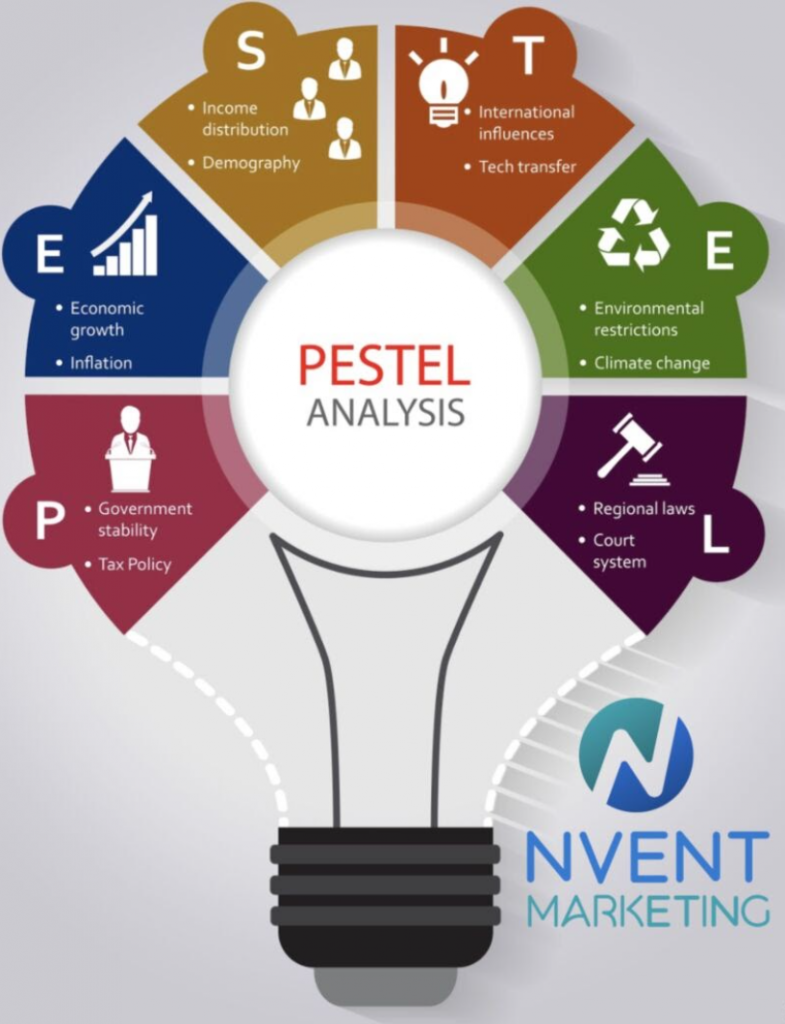
A PESTEL analysis (sometimes referred to as PESTLE analysis) is a strategic planning framework used to evaluate the external factors that can influence a business’s performance and long-term growth. The acronym stands for Political, Economic, Social, Technological, Environmental, and Legal factors.
Businesses use PESTEL analysis to identify opportunities, anticipate risks, and make informed decisions when developing marketing, operational, and growth strategies. In 2026, it remains one of the most valuable tools for organizations seeking to navigate rapidly changing market conditions and maintain a competitive advantage.
When developing strategic marketing plans for our clients, we often combine PESTEL analysis with SWOT analysis to gain a more comprehensive understanding of both internal and external business factors. Learn more about our marketing strategy and how we help businesses create data-driven growth plans.
Today’s business environment is evolving faster than ever. Emerging technologies, changing consumer expectations, economic uncertainty, sustainability initiatives, and new regulations can all impact business performance. A PESTEL analysis helps organizations stay proactive by identifying external trends before they become challenges or opportunities.
One of the biggest advantages of PESTEL analysis is its ability to support strategic decision-making. By understanding the forces shaping the marketplace, businesses can better adapt their products, services, marketing efforts, and operational strategies.
PESTEL analysis becomes even more powerful when combined with other strategic frameworks such as SWOT Analysis and Porter’s Five Forces. Together, these tools provide a complete view of both the internal and external factors influencing business success.
Political factors examine how government actions and policies can affect a business. These may include taxation policies, trade agreements, political stability, labor laws, tariffs, and government regulations.
For example, changes in international trade policies or import regulations can directly impact supply chains, operating costs, and market expansion opportunities. Businesses operating across multiple regions must continually monitor political developments to minimize risk and identify growth opportunities.
Economic factors focus on the financial conditions that influence consumer spending and business operations. These include inflation rates, interest rates, exchange rates, unemployment levels, economic growth, and overall market confidence.
Economic shifts can significantly affect purchasing behavior. During periods of economic uncertainty, consumers may reduce discretionary spending, while favorable economic conditions often lead to increased demand and business investment. Understanding economic trends allows organizations to adjust pricing strategies, budgets, and growth plans accordingly.
Social factors examine demographic trends, cultural values, lifestyle changes, consumer attitudes, and purchasing behaviors that influence market demand. Understanding these shifts helps businesses align their products, services, and messaging with evolving customer expectations.
In 2026, consumers increasingly prioritize sustainability, diversity, transparency, convenience, and social responsibility when making purchasing decisions. Generational trends, particularly among Millennials and Generation Z, continue to shape how brands communicate and engage with their audiences. Companies that understand and adapt to these changing social dynamics are often better positioned for long-term growth.
Technological factors focus on innovations and advancements that can impact business operations, customer experiences, and competitive positioning. Rapid developments in artificial intelligence (AI), automation, cybersecurity, cloud computing, data analytics, and digital infrastructure continue to transform industries across the globe.
Businesses that embrace emerging technologies can improve efficiency, enhance customer experiences, and create new revenue opportunities. Conversely, organizations that fail to adapt to technological change may struggle to remain competitive in increasingly digital markets.
Regularly evaluating technological trends allows businesses to identify opportunities for innovation while minimizing potential disruptions.
Environmental factors examine the ecological issues that may affect business operations and strategic decision-making. These include climate change, carbon emissions, sustainability initiatives, waste management, resource availability, and environmental regulations.
Environmental responsibility has become a critical consideration for organizations of all sizes. Consumers, investors, and regulators increasingly expect businesses to demonstrate sustainable practices and reduce their environmental impact.
Companies that proactively address environmental concerns often strengthen their brand reputation, improve operational efficiency, and reduce long-term risk.
Legal factors include the laws and regulations that govern business activities within specific markets. These may involve employment regulations, intellectual property protection, data privacy requirements, consumer protection laws, health and safety standards, advertising regulations, and industry-specific compliance requirements.
As regulatory environments continue to evolve, businesses must remain informed and compliant to avoid legal challenges, financial penalties, and reputational damage. Data privacy regulations, cybersecurity requirements, and consumer protection laws remain particularly important considerations in today’s digital economy.
A successful PESTEL analysis requires a structured approach that combines research, collaboration, and strategic thinking. Follow these steps to maximize the value of your analysis:
Assemble a cross-functional team. Include stakeholders from marketing, finance, operations, legal, sales, and leadership to gain diverse perspectives on potential opportunities and risks.
Gather reliable information. Use trusted sources such as government reports, industry publications, economic forecasts, market research studies, and internal business data to support your analysis.
Analyze each PESTEL category. Evaluate how political, economic, social, technological, environmental, and legal factors may impact your organization, industry, and customers.
Identify opportunities and threats. Determine which external factors create growth opportunities and which may present challenges or risks.
Prioritize findings. Focus on the factors most likely to influence your business based on their potential impact and likelihood of occurrence.
Integrate with other strategic frameworks. Combine PESTEL insights with SWOT Analysis, Porter’s Five Forces, competitive analysis, and market research to create a comprehensive strategic plan.
Review and update regularly. External business conditions change rapidly. Revisit your PESTEL analysis at least annually or whenever significant market, economic, regulatory, or technological changes occur.
A PESTEL analysis is more than a planning exercise—it serves as a valuable decision-making tool that helps organizations anticipate change, reduce uncertainty, and identify new opportunities for growth.
Whether you’re launching a new product, entering a new market, developing a marketing strategy, or evaluating long-term business objectives, understanding external influences can help you make more informed and strategic decisions.
By regularly monitoring political, economic, social, technological, environmental, and legal factors, businesses can remain agile, proactive, and competitive in an increasingly complex marketplace.
In today’s rapidly evolving business environment, organizations can no longer rely solely on internal analysis when developing strategic plans. A comprehensive PESTEL analysis provides critical insights into the external forces that influence business performance, customer behavior, and market opportunities.
When combined with strategic frameworks such as SWOT Analysis, PESTEL helps organizations gain a complete understanding of their operating environment and develop more effective growth strategies.
Businesses that consistently evaluate external trends, adapt to change, and proactively address emerging challenges are better positioned for long-term success. By incorporating PESTEL analysis into your strategic planning process, you can identify opportunities sooner, mitigate risks more effectively, and build a stronger foundation for sustainable growth in 2026 and beyond.
One of the greatest strengths of a PESTEL analysis is its ability to reveal how multiple external factors often overlap and influence one another. Consider the rapid adoption of artificial intelligence (AI) across industries. While AI is primarily a technological advancement, it also introduces legal, social, and economic considerations that businesses must address.
Organizations implementing AI-powered tools can improve efficiency, automate repetitive tasks, and enhance customer experiences. However, they must also navigate evolving data privacy regulations, cybersecurity requirements, ethical concerns, and workforce implications. A comprehensive PESTEL analysis helps businesses evaluate these interconnected factors before making significant technology investments.
Environmental sustainability provides another practical example. Climate initiatives are no longer limited to environmental considerations alone. New regulations, carbon reduction goals, and sustainability reporting requirements create legal and economic implications for businesses. At the same time, consumers increasingly favor brands that demonstrate environmental responsibility, making sustainability a powerful social and marketing factor as well.
Companies that proactively monitor these trends can identify opportunities, reduce risk, and gain a competitive advantage. By viewing business decisions through a PESTEL lens, organizations can better prepare for future market changes while building more resilient strategies.
A PESTEL analysis is not a one-time exercise. It should serve as an ongoing strategic planning tool that helps businesses adapt to changing market conditions and emerging opportunities. By regularly evaluating Political, Economic, Social, Technological, Environmental, and Legal factors, organizations can make more informed decisions and respond proactively to external challenges.
Whether you’re launching a new product, entering a new market, developing a marketing strategy, or planning long-term business growth, a well-executed PESTEL analysis can provide valuable insights that support better decision-making.
At Nvent Marketing, we help businesses integrate PESTEL analysis into comprehensive growth strategies, market research initiatives, and long-term planning efforts. Our team works closely with clients to identify opportunities, evaluate risks, and create data-driven marketing strategies that support sustainable business growth in 2026 and beyond.
If you’re ready to strengthen your strategic planning process and gain a deeper understanding of the factors shaping your industry, our team is here to help.
In today’s rapidly evolving business environment, understanding external market forces is more important than ever. A PESTEL analysis provides a structured framework for evaluating the political, economic, social, technological, environmental, and legal factors that can influence business performance.
When combined with strategic planning tools such as SWOT Analysis, competitive research, and market analysis, PESTEL helps organizations make smarter decisions, identify growth opportunities, and minimize potential risks.
Businesses that consistently monitor external trends and adapt their strategies accordingly are better positioned for long-term success. By incorporating PESTEL analysis into your planning process, you can create stronger strategies, improve resilience, and build a sustainable competitive advantage.
For more information about the benefits of conducting a PESTEL analysis, read this article here.

David Murphy is a writer who specializes in search engine optimization, website design, and information technology. With over 10 years of experience working in the tech industry, he provides practical tips and advice to help small businesses and entrepreneurs improve their online presence. David has authored numerous articles and eBooks on topics like increasing website traffic, speeding up load times, and integrating analytics. His passion lies in making complex technical subjects easy for the average reader to understand. When he's not writing or researching the latest in SEO and web development, David enjoys hiking, camping, and exploring the great outdoors near his home..


