SEO for SAAS
Grow organically, dominate search.

Why SEO Matters for SaaS Companies
SaaS buyers don’t make quick decisions. They research, compare options, read reviews, and look for proof before committing. Search plays a major role in that process. People look for:
If your company shows up during those searches, you’re part of the conversation early. If not, you’re trying to catch up later through paid ads or outbound efforts.
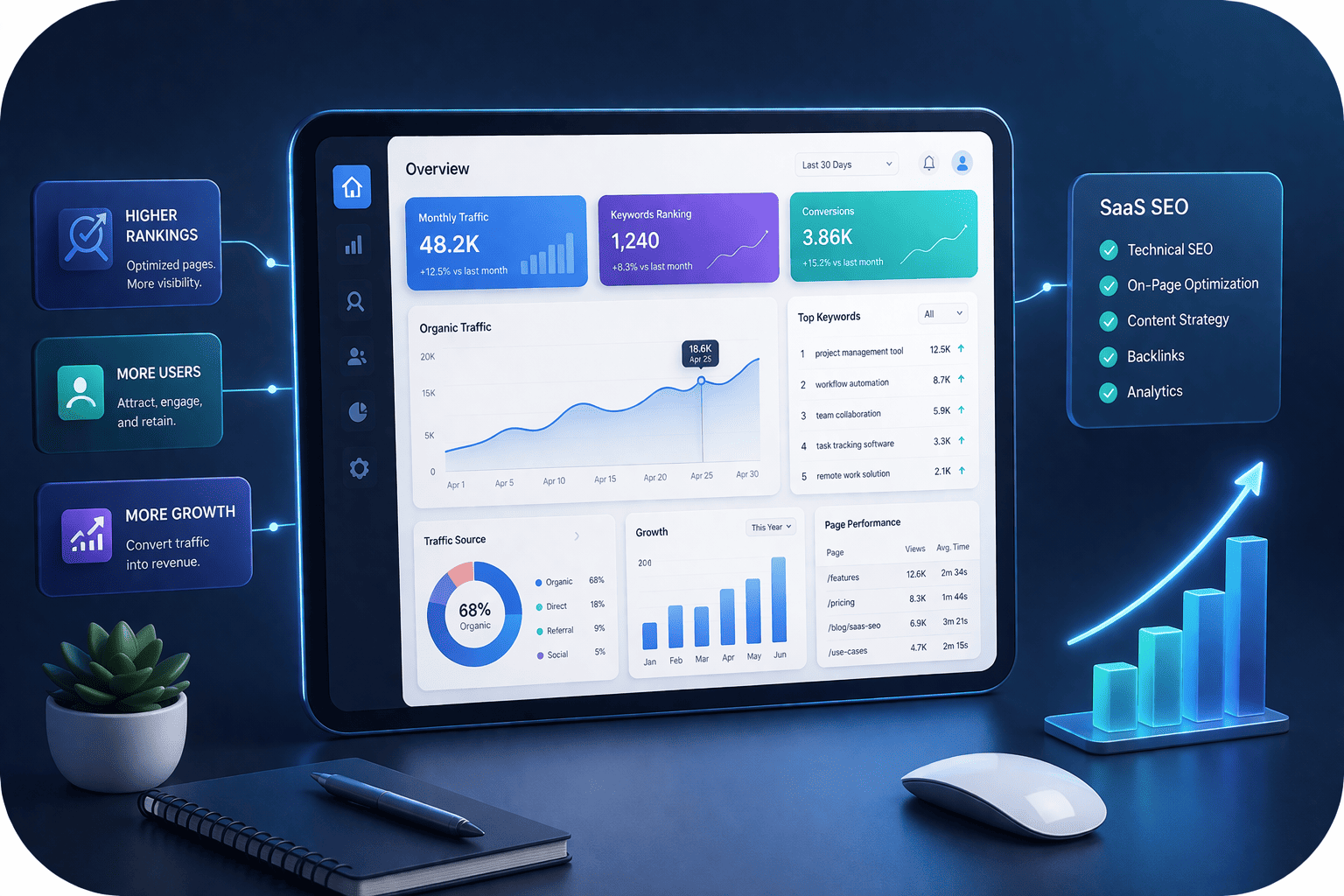
Build Pages Around Use Cases and Features
Many SaaS websites focus too much on high-level messaging and not enough on how the product is actually used. That creates a gap in search visibility. Instead, build pages that align with real use cases:
This structure helps your site rank for more specific searches and makes it easier for users to see how your product fits their needs.
Comparison and Alternative Pages Drive High-Intent Traffic
One of the most effective SEO strategies for SaaS is comparison content. Buyers often search for:
Creating honest, detailed comparison pages helps you capture that traffic. These visitors are already close to making a decision.
When done well, these pages don't just rank. They convert.
Content That Solves Problems Brings in Early Traffic
Not everyone is ready to search for software yet. Many are still trying to understand their problem. This is where educational content works. Write articles like:
📌 Google emphasizes helpful, user-focused content in its guidelines.
These pages bring in traffic earlier and guide users toward your product over time.

Your Website Must Convert Visitors into Users
Traffic alone doesn't grow a SaaS business. Your website needs to turn visitors into trial users, demo requests, or signups. That means:
If your site isn't built to convert, SEO traffic won't translate into growth. This is where your website design and development becomes critical:
Internal Linking Builds Authority and Flow
SaaS websites often have a lot of content. Without structure, it becomes disconnected. Internal linking ties everything together.
Internal linking is the glue that transforms scattered content into a powerful, connected ecosystem.
Blog posts should link to relevant feature pages
Comparison pages should link to signup pages
Use case pages should connect to both
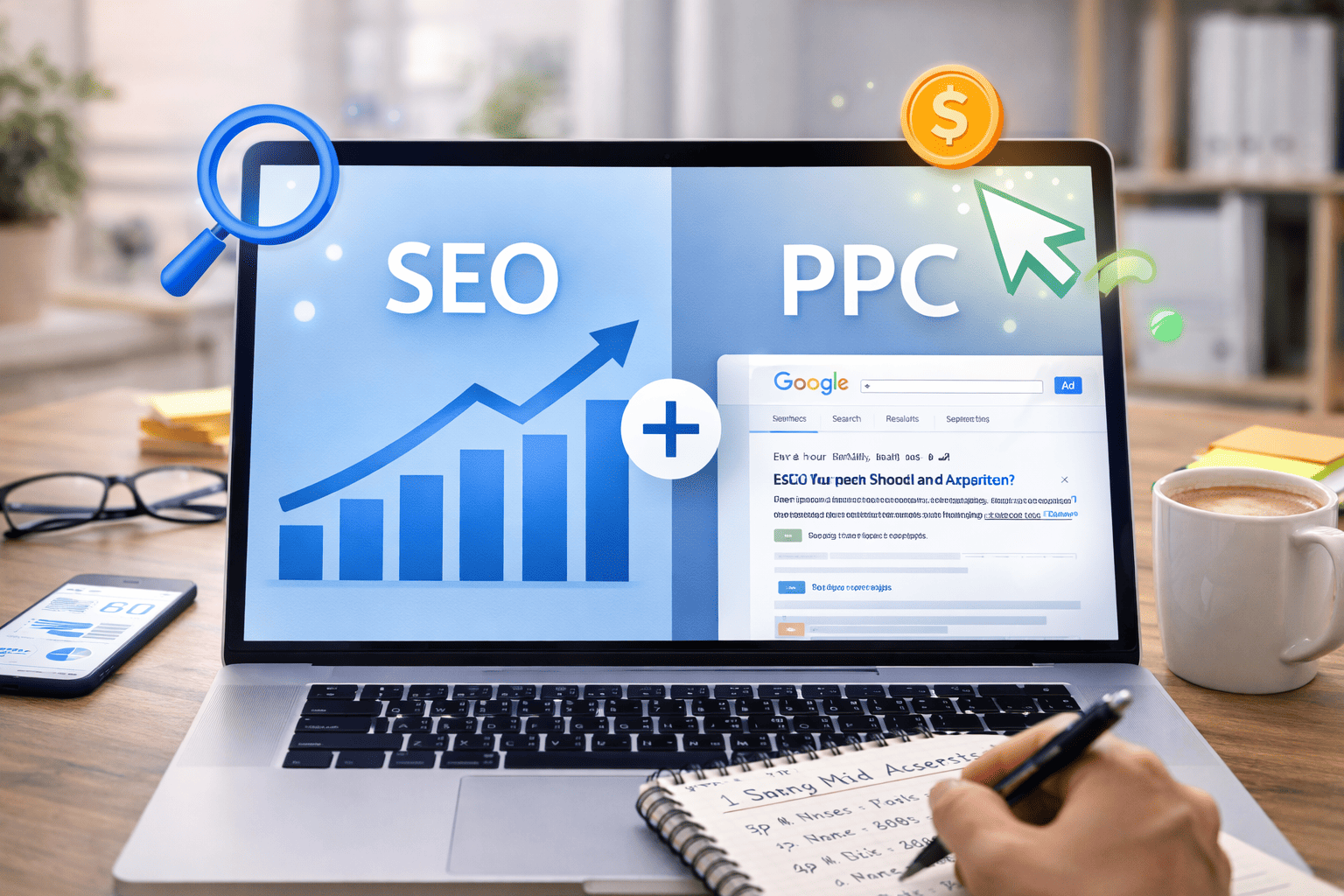
SEO Complements Paid Acquisition
Many SaaS companies rely heavily on paid ads. That works, but it's expensive and stops the moment you turn it off.
SEO builds a long-term channel. It reduces your cost per acquisition over time and supports your paid campaigns. If you're already running paid search, this connects directly to your broader PPC strategy.
Frequently Asked Questions
How long does SEO take for SaaS companies?
Most SaaS companies start seeing traction in 3 to 6 months, with stronger growth over time as more content and pages are added.
What keywords should SaaS companies target?
Focus on problem-based searches, feature-related terms, and comparison queries like “best [tool] for [use case]” or “[product] vs [competitor].”
Do SaaS companies need blog content?
Yes. Blog content helps capture early-stage searches and supports your core product pages through internal linking.
What is the most important SEO page for SaaS?
There isn’t just one. Feature pages, use case pages, and comparison pages all play a role in driving traffic and conversions.
How important are backlinks for SaaS SEO?
Backlinks help build authority, especially in competitive markets. Industry publications, partnerships, and high-quality content can all contribute.
Should SaaS companies invest in SEO or paid ads?
Both have value. Paid ads drive immediate traffic, while SEO builds long-term growth and reduces reliance on paid acquisition.
Ready to Get More Customers Through Search?
Nvent Marketing helps SaaS companies attract qualified traffic, improve conversion rates, and build a sustainable inbound lead engine through SEO.
Call (888) 388-8030 to talk through your current strategy and where SEO can drive better results.